
Do You Really Need a Middle School Career Strategy? The Truth About Building Equity-Centered STEM Programs
.jpg/v1/fill/w_320,h_320/file.jpg)
In the rapidly evolving landscape of global industry and technological advancement, we often find ourselves looking toward higher education as the primary engine for talent development. As we navigate the complexities of a 21st-century workforce, the traditional focus on college recruitment and late-high school internships is proving to be a reactive rather than a proactive approach. The reality we must confront is that by the time a student enters their senior year of high school, their trajectory in Science, Technology, Engineering, and Mathematics (STEM) has often already been determined by the opportunities: or lack thereof: presented to them during their formative middle school years.
At The Anderson Strategy Group, we have seen firsthand through over 18 years of dedication to educational excellence that the middle school years (typically grades 5 through 8) represent a critical window for career intervention. This is the period where academic identities are forged, where interest in technical fields either flourishes or withers, and where systemic inequities begin to manifest as permanent barriers to entry. To build a truly robust and diverse talent pipeline, we must shift our gaze earlier and ask: do we have a strategy that meets students where their dreams are first starting to take shape?
The Critical Window: Why Middle School is the "Make or Break" Period
In today’s educational environment, the data is clear: 8th grade is a pivotal crossroads for future STEM success. Research consistently identifies 8th-grade Algebra as one of the strongest predictors of whether a student will eventually pursue and succeed in a STEM degree. When students are diverted away from advanced math pathways at age 13 or 14, they are often inadvertently disqualified from high-level engineering or data science careers before they even have a driver’s license.
However, the challenge is not merely academic. Middle school is a "crucial time for students to make decisions to take STEM courses," according to Perkins V (The Strengthening Career and Technical Education for the 21st Century Act) provisions. During these years, students are developing their sense of "STEM identity": the internal belief that they are the kind of person who can succeed in technical fields. Without a deliberate middle school career strategy, we risk losing brilliant minds who simply don't see themselves represented in the current industry landscape.
Equity-Centered STEM: Moving Beyond Performative Diversity
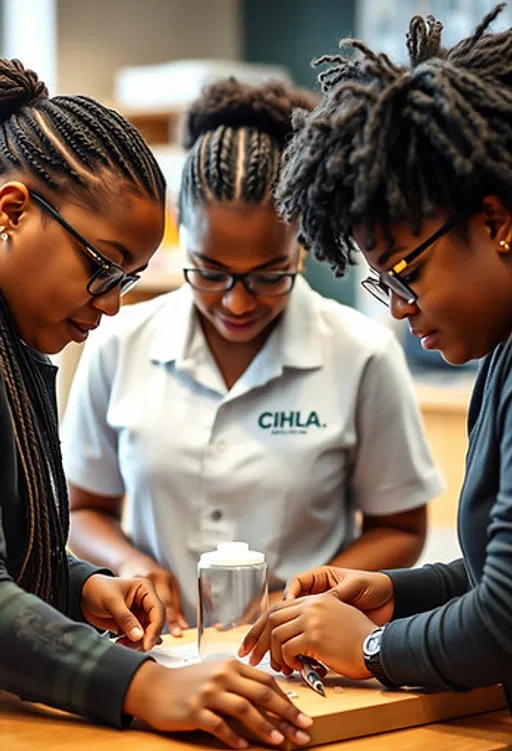
In the realm of corporate social responsibility (CSR) and educational reform, there is a growing realization that "equity" is more than a buzzword; it is a foundational requirement for sustainable growth. Building equity-centered STEM programs means acknowledging that the starting line is not the same for everyone. For students in Black and Brown communities, as well as those in rural or underserved urban areas, the gap in access to high-quality STEM resources is often profound.
Through our work in STEM program development, we emphasize that equity must be baked into the design of the program, not added as an afterthought. This means moving beyond one-off "Career Day" presentations and toward long-term partnerships that provide consistent exposure, mentorship, and resources. When we prioritize equity, we are not just helping individual students; we are rectifying a systemic imbalance that has historically excluded women: who still only make up 29% of the STEM workforce: and underrepresented minorities from the highest-paying and most influential sectors of our economy.
The Power of Social Capital and Representation
One of the most significant advantages we can provide to a middle school student is social capital: the network of relationships and professional connections that facilitate upward mobility. In many affluent communities, this capital is inherited. In underserved communities, it must be intentionally cultivated.
A successful middle school career strategy focuses heavily on:
Near-peer mentoring: Connecting middle schoolers with high school or college students who share their background.
Professional exposure: Introducing students to role models who look like them and are thriving in technical roles.
Workplace experiences: Bringing the corporate environment to the classroom or the classroom to the corporate office to demystify what a "job in tech" actually looks like.

By fostering these connections early, we empower students to navigate the professional world with confidence. They begin to understand the "unspoken rules" of networking and professional communication, which are just as vital as their ability to code or solve complex equations. This is how we transform educational organizations and create pathways that are as durable as they are inclusive.
Building the Pipeline: Connecting Middle School to Entry-Level Hiring
It may seem counterintuitive for a corporate recruiter to care about what’s happening in a 6th-grade science lab, but the forward-thinking organizations we partner with understand that this is the origin point of their future workforce. By integrating real-world career pathways with K-16 (Kindergarten through Bachelor's degree) education, businesses can shape the skills of their future employees a decade before they hit the job market.
As we evolve our approaches to talent pipeline development, we must look at the transition points. How does a middle school robotics club lead to a high school CTE (Career and Technical Education) certification, which then leads to a college internship and an entry-level position? Without a cohesive strategy, these stages remain fragmented, and students: particularly those from marginalized backgrounds: fall through the cracks.
Moreover, early engagement allows companies to instill the "soft skills" or social-emotional skills that are often cited as missing in new hires: teamwork, critical thinking, and collaborative problem-solving. Through hands-on, project-based learning, we can foster these competencies while simultaneously teaching the technical curriculum. This dual focus ensures that the talent emerging from our programs is not just technically proficient but professionally ready to thrive in a team environment.
Scaling Without Losing Focus
A common challenge we hear from leaders is the difficulty of scaling these initiatives without losing the community-centered focus that made them successful in the first place. Through our framework for scaling equity-centered programs, we advocate for a "depth over breadth" approach in the initial phases. It is better to have a profound, transformative impact on 100 students in a specific district than a superficial interaction with 1,000 students across the country.
Once the model is proven: once the middle schoolers are successfully transitioning into advanced high school STEM tracks: the program can be expanded through strategic partnership cultivation. This requires a commitment to measurable impact, moving away from "photo-op" philanthropy and toward data-driven outcomes that show real shifts in student achievement and career aspirations.
The Truth About the Strategy
So, do you really need a middle school career strategy? The truth is that if you are waiting until high school or college to address your diversity and talent needs, you are already behind the curve. A middle school strategy is the only way to ensure that the gates to STEM remain open for every child, regardless of their zip code or background. It is the missing link in the corporate talent pipeline and the most effective tool we have for building long-term equity in education.
At The Anderson Strategy Group, we are dedicated to helping you bridge these gaps. We believe that by working together, we can create a future where every student has the tools, the confidence, and the network to reach their full potential.

As we look to the future, let us continue to build programs that don't just fill seats today, but empower the innovators, thinkers, and changemakers of tomorrow. Together, we can transform the landscape of STEM education and create a brighter, more equitable tomorrow for the next generation of leaders. Let us start today, in the middle school classrooms where the future is already being written.
Comments