
How to Scale STEM Programs That Actually Prepare Students for Advanced Manufacturing and EVs
.jpg/v1/fill/w_320,h_320/file.jpg)
As we navigate the rapidly evolving landscape of the 21st-century workforce, it is becoming increasingly clear that the traditional boundaries between education and industry are dissolving. In the realm of global innovation, the shift toward electric vehicles (EVs) and advanced manufacturing is not just a trend: it is a fundamental transformation of how we move, build, and sustain our world. However, as this sector gains momentum, a critical question remains: are we truly equipping the next generation with the specific skills they need to thrive in these high-tech environments, or are we simply going through the motions of "STEM" without a clear destination?
At The Anderson Strategy Group, we have seen firsthand that scaling STEM programs requires more than just adding a few robotics kits to a classroom. To build a robust talent pipeline that satisfies the demands of the EV revolution and Factory 4.0, we must move toward a model of sustainable, equity-centered growth. This means fostering deep-rooted partnerships that bridge the gap between K-16 education and the factory floor.
Building a Collaborative Ecosystem
One of the most significant hurdles in scaling STEM education is the tendency for organizations to work in silos. We often see fantastic pilot programs that stay stuck in a single school or district because they lack the structural support to expand. As we look to successful national models, such as the Manufacturing USA network, we see that the secret to scale lies in a collaborative ecosystem. By bringing together universities, community colleges, private sector companies, and local nonprofits, we can create a shared infrastructure that outlasts any single grant or leadership change.
Through our work in partnership cultivation, we emphasize that a true ecosystem isn't just about a one-time donation; it’s about a long-term commitment to shared goals. When corporate partners engage with K-16 institutions early on, they aren't just helping students: they are actively shaping their own future talent pipeline.
Defining Multi-Level Pathways: Awareness to Expert
Scaling effectively means recognizing that a student’s journey from a curious middle schooler to a specialized EV technician or manufacturing engineer is a marathon, not a sprint. We advocate for a "stackable" approach to STEM education, which breaks down into three essential phases:
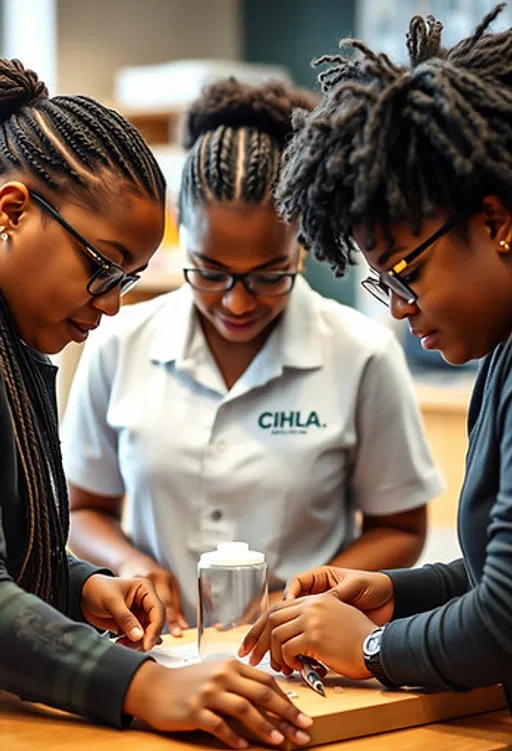
Awareness (K-8): This is where we spark interest. Through hands-on experiences and early exposure to the "cool" side of manufacturing: like 3D printing and basic circuitry: we can demystify the industry. We often say that middle school STEM programs are the missing link because this is the age where many students, particularly girls and students of color, decide whether they are "good" at math and science.
Practitioner (High School & Community College): At this level, students should be earning certifications that have real-world currency. Programs like LIFT’s Learning Lab provide on-site certifications in welding and CNC machining, ensuring that students aren't just learning theory but are gaining the technical fluency required by today’s employers.
Expert (University & Beyond): For those pursuing advanced degrees, the focus shifts to innovation, systems design, and leadership within the manufacturing space.
By aligning these levels, we ensure that students don’t fall through the cracks during transition years. This is the difference between a one-off "career day" and a comprehensive career pathway.
Hands-On Innovation: The EV and Advanced Manufacturing Focus
To prepare students specifically for the EV sector, the curriculum must evolve to include applied electronics and power systems. We cannot expect a student to understand the complexities of an electric powertrain if they have never built a simple circuit.
We’ve seen incredible success with project-based learning models, such as the Advanced Manufacturing Pathways (AMP) initiative, where students work on designing and building actual vehicles. These projects allow students to use digital design tools, 3D printers, and data analysis software in a way that feels tangible and exciting. When a student sees a car they helped design move under its own power, it transforms their understanding of what is possible.

Moreover, as we integrate these technical skills, we must also consider the role of emerging technologies. For instance, integrating AI within K-12 STEM partnerships allows students to understand how predictive maintenance and automated systems are changing the factory floor before they even step foot in a professional setting.
Empowering Educators as the Catalyst for Scale
We can have the most advanced curriculum in the world, but without supported and well-trained educators, scaling is impossible. Many teachers feel overwhelmed by the rapid pace of technological change. How can we expect a high school teacher to lead a lesson on EV battery chemistry if they haven't been given the professional development (PD) to master the topic themselves?
Sustainable scaling requires investing in the people who deliver the instruction. We recommend year-long PD experiences that connect teachers directly with industry professionals. By giving educators a "behind-the-scenes" look at modern manufacturing, we empower them to bring real-world problems back to their classrooms. This creates an environment of sustainable growth where the program can thrive even as technology continues to shift.
Centering Equity in the Green Revolution
As we scale, we must be intentional about who is being invited to the table. The transition to EVs and advanced manufacturing offers a unique opportunity to build wealth in historically underserved communities. However, if we aren't careful, the "green gap" will only widen existing disparities.
Equity-centered STEM programs are not just about recruitment; they are about retention and support. This means removing barriers to entry: such as requiring high-level math prerequisites before a student has even had a chance to explore the field. We have seen programs achieve 100% job placement by making technical education accessible to those who might not have a traditional science background but possess the drive and curiosity to learn.
By empowering Black and Brown communities through educational excellence, we ensure that the workforce of tomorrow reflects the diversity of our world. This isn't just the right thing to do; it is an economic imperative. A diverse workforce brings a wider range of perspectives to problem-solving, which is essential for driving innovation in a competitive global market.
Moving Beyond "Photo-Op" Partnerships
Finally, to scale these programs effectively, we must change how we measure success. For too long, corporate-education partnerships have been judged by "vanity metrics": the number of students who attended a single assembly or the quality of a photo-op with a giant check.
If we want to build something that lasts, we must focus on measuring real impact. This includes tracking:
Long-term student enrollment in technical pathways.
The number of industry-recognized credentials earned.
Job placement rates and starting wages for program graduates.
The retention of teachers who participate in specialized STEM training.
When we treat these partnerships with the same rigor as any other business investment, we move from a "pilot-program" mindset to a systemic solution. Avoid the common mistakes many make in corporate-education partnerships by setting clear, data-driven milestones from day one.
A Collective Call to Action
The road to a fully realized EV and advanced manufacturing workforce is paved with collaboration, equity, and a relentless focus on real-world application. We have the tools and the talent; what we need now is the strategic vision to scale these efforts beyond the individual classroom.
As we look to the future, let us continue to build bridges that connect our students' potential with the industry’s needs. Together, we can create a brighter tomorrow where every student has the opportunity to become an innovative thinker, a skilled problem solver, and a leader in the green economy. Let’s stop just talking about the future of work and start building it, one scalable partnership at a time.

At The Anderson Strategy Group, we are dedicated to helping you navigate these complexities. Whether you are an educational leader looking to revitalize your curriculum or a corporate executive aiming to secure your future workforce, we are here to help you unlock the transformative power of strategic STEM partnerships. Let's reach new heights together.
Comments