
Perkins V Matters: How to Use CTE Funding to Fuel Your Middle School STEM Programs
.jpg/v1/fill/w_320,h_320/file.jpg)
As we navigate the rapidly evolving landscape of 21st-century education, it has become increasingly clear that the traditional boundaries between "school" and "career" are dissolving. In today’s economy, the demand for STEM-literate professionals is gaining momentum, yet many of our students are not introduced to these career pathways until they are halfway through high school: or even later.
At The Anderson Strategy Group, we have seen firsthand how early exposure can be the catalyst for lifelong success. This is why Perkins V (The Strengthening Career and Technical Education for the 21st Century Act) is such a transformative piece of legislation. It isn't just for high schools or community colleges anymore. Perkins V provides a vital bridge to bring high-quality Career and Technical Education (CTE) into the middle school classroom, allowing us to cultivate the next generation of innovative thinkers and problem solvers much earlier than before.
Understanding the Perkins V Shift
For those who may be new to the acronyms, Perkins V is the primary federal funding source for CTE programs across the United States. With an annual appropriation of approximately $1.4 billion, it is a powerhouse for educational reform. Historically, these funds were heavily focused on grades 9-12 and post-secondary institutions. However, the reauthorization of the Act brought a significant shift: it explicitly allows: and encourages: the use of funds for middle grade career exploration and development.
This shift is crucial because middle school is the "sweet spot" for engagement. It is the period where students begin to form their identities and decide whether they are "math people" or "science people." By leveraging CTE funding at this stage, we can ensure that every student, regardless of their background, has the opportunity to see themselves in a STEM career.
Why Middle School STEM is the Key to Equity
One of our core missions at The Anderson Strategy Group is driving equity-centered impact. When we wait until the eleventh or twelfth grade to introduce specialized STEM tracks, we often find that the "participation gap" has already widened. Students from underrepresented communities may have already opted out of advanced math or science tracks because they didn't see the real-world application of those subjects.
Through Perkins V, districts can fund middle school innovations that focus on closing these equity gaps. Whether it’s through summer coding camps or curriculum that integrates STEAM (Science, Technology, Engineering, Arts, and Mathematics), we can provide the early intervention necessary to ensure all students can thrive.
Practical Ways to Fuel Your Program with Perkins V Funds
Knowing that the money is there is one thing; knowing how to spend it effectively to create sustainable growth is another. Here are several allowable uses of Perkins V funds that can transform your middle school STEM offerings:
1. Curriculum Development and Integration
Perkins V allows for the development and implementation of CTE programs of study that are aligned with high-demand industry sectors. In the middle grades, this often looks like "career exploration" modules. Instead of just learning about biology in a vacuum, students can explore how biology applies to the healthcare industry or agricultural technology.
2. Equipment, Supplies, and Modern Labs
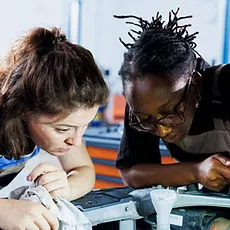
One of the most exciting aspects of Perkins V is the ability to purchase industry-standard equipment. We often see middle schoolers’ eyes light up when they get to work with 3D printers, robotics kits, or professional-grade software. These tools aren't just toys; they are the entry points to real-world career pathways.
3. Professional Development
We cannot expect our educators to teach the technologies of tomorrow with the training of yesterday. Perkins V funds can be used for teacher training and professional development to ensure that middle school staff are comfortable with new STEM technologies and pedagogy.

4. Career Exploration and Guidance
Middle school is the ideal time for students to start building their "career literacy." Funding can be used to support career guidance and academic counseling, helping students understand the connection between their current coursework and future opportunities in fields like cybersecurity, advanced manufacturing, and renewable energy.
The Power of the Comprehensive Local Needs Assessment (CLNA)
To unlock Perkins V funding, Local Education Agencies (LEAs) must complete a Comprehensive Local Needs Assessment (CLNA) every two years. This is not just a bureaucratic hurdle; it is a strategic opportunity. The CLNA requires districts to look at student performance data, labor market needs, and the overall effectiveness of their CTE programs.
As we evaluate these needs, it is essential to ask: Are we providing enough support at the middle school level to feed our high school pipelines? If your high school engineering program is seeing low enrollment from underrepresented groups, the solution often starts in the 6th, 7th, and 8th grades. By identifying these gaps in the CLNA, you create the justification needed to direct Perkins V dollars toward your middle school STEM initiatives.
Forging Partnerships for Sustainable Success
No school district is an island. To truly move the needle on STEM education, we must foster deep collaborations between education and industry. This is a key aspect of our work at The Anderson Strategy Group: helping schools and corporations find common ground.
Perkins V specifically encourages the cultivation of these partnerships. When middle school students have the chance to interact with professionals from the field, the abstract concepts of the classroom become concrete possibilities. Whether it’s through guest speaking, site visits, or mentorship programs, these connections are what make a STEM program sustainable and relevant.
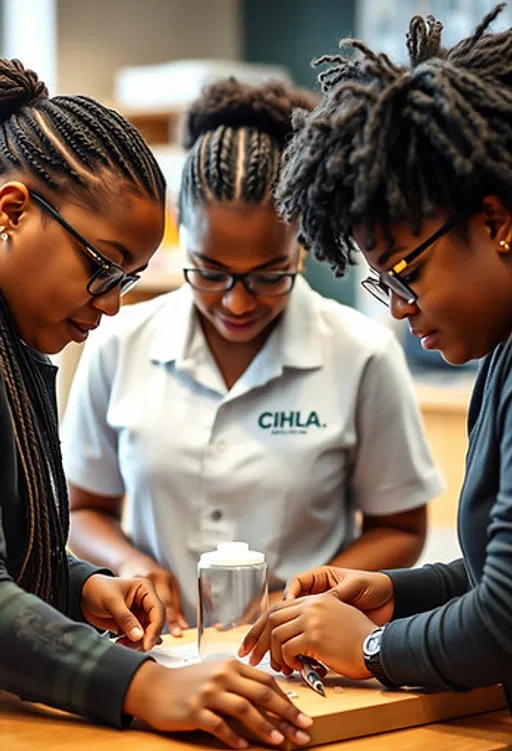
We often discuss the 7 mistakes you’re making with your education-corporate partnerships, and one of the biggest is failing to engage students early enough. By the time a student is a senior, they’ve often already made up their mind about their future. But a middle schooler? They are still full of curiosity and potential.
Navigating the Road Ahead
As we look to the future, the integration of CTE into middle school STEM programs is not just a "nice-to-have": it is a necessity for workforce readiness. The approximately $1.4 billion allocated annually through Perkins V represents a massive opportunity to reshape how we view the K-16 journey.
However, we understand that navigating federal funding, state leadership requirements, and curriculum alignment can be overwhelming. That is why our team specializes in STEM program development and partnership cultivation. With over 18 years of experience, we help districts and organizations unlock the full potential of their resources to create programs that are both operationally excellent and mission-driven.
Let’s Build the Future Together
The shift toward middle school CTE is gaining momentum, and those who stay ahead of the curve will be the ones who see the greatest impact on their students’ lives. By utilizing Perkins V funding strategically, we can move beyond pilot programs and create systemic solutions that empower every child to thrive in the modern economy.
If you are looking to revitalize your middle school STEM offerings or need guidance on aligning your programs with Perkins V requirements, let’s talk. Together, we can build career pathways that start earlier, reach further, and create a brighter tomorrow for all learners.
For more insights on how to transform your educational landscape, feel free to explore our blog or reach out to us directly. Let us continue to push the boundaries of what is possible in education and workforce development.
Comments